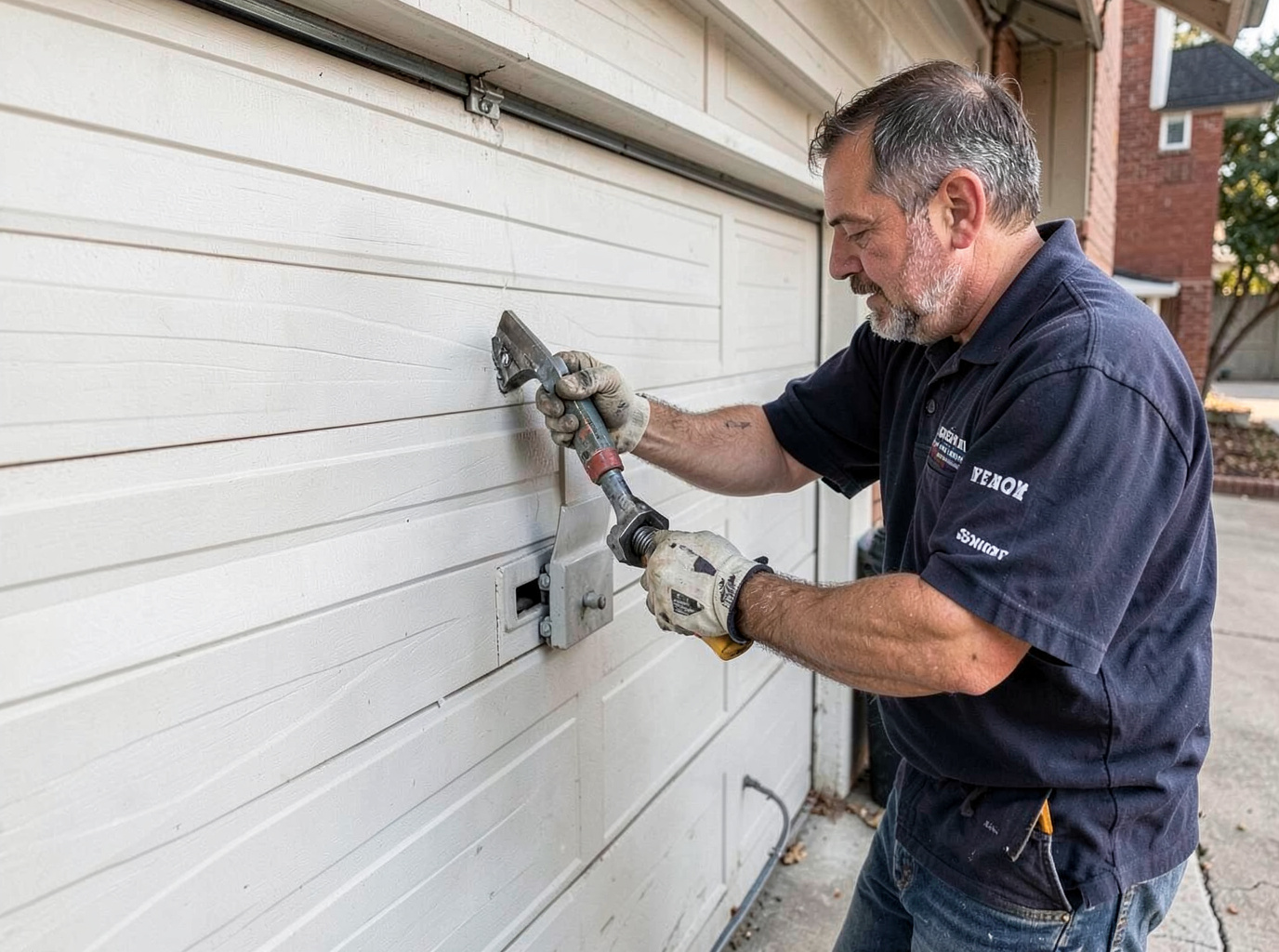
Garage Door Repair in San Antonio, Done Properly
A garage door that sticks, shudders, or stops halfway is more than an inconvenience. It is the largest moving object on your home, and it deserves a careful look before anyone touches a spring or a cable. At Garage Door Repair San Antonio, we start every visit by finding out what is actually wrong, explaining it in writing, and showing you the old parts next to the new ones before any work begins.
Why Choose Garage Door Repair San Antonio
We are a local crew working out of 10817 Hillpoint Dr in the 78217 ZIP code, and we spend most of our days on doors in the neighborhoods around the Loop 410 corridor and the Northeast Side. That means we see the same wear patterns repeatedly, and we know how they show up in the homes around here. Our approach is built on a few habits you can check for yourself.
First, we inspect before we recommend. The door, springs, cables, rollers, hinges, opener, and safety sensors all get looked at, not just the part you called about. Second, every finding is written down in plain language. You will see what failed, why it failed, and what the options are, so you are not relying on memory or a verbal summary. Third, we walk you through the old component and the replacement side by side, so you can see the difference in wire gauge, cycle rating, or roller material before you agree to anything. Fourth, we explain how the work will be done and what you should expect while it is underway, including how we keep the door safe for the people walking past it. We do not rush through a repair to clear a driveway. We would rather you understand the job than feel pressured into it.
Why Now Is the Right Time to Look at Your Garage Door
San Antonio does not give a garage door an easy life. Summer afternoons push the outside surface of the door well past the temperature inside, and that heat expands the metal sections and softens the lubricant that keeps rollers quiet. Once the heat breaks and the first cold snaps arrive in late fall, metal contracts and springs that were already fatigued can give way without much warning. Hail season in the spring can also dent panels and crack the bottom seal, which lets moisture and dust into the garage and onto the opener's electronics.
The soil under many older homes in this part of town adds another wrinkle. Clay-heavy ground and limestone-influenced foundations shift slightly as moisture comes and goes, and a slab that tilts even a little can throw a door out of level. A door that is out of level puts uneven strain on one side of the spring system, and that uneven strain is one of the most common reasons a cable or drum fails. Catching that imbalance early is far less disruptive than dealing with a door that has come off its track in the middle of a workday.
Waiting also has a quiet toll in convenience. A door that still works but makes a grinding noise, lifts slowly, or reverses later than it should is telling you something. Each cycle adds wear to the part that is already struggling. Looking at the door now, while the failure is only starting, usually means fewer surprises and a clearer set of choices for you to weigh.
How We Do the Work, Step by Step
The repair itself is only one part of the process. Here is how a typical visit unfolds at Garage Door Repair San Antonio.
We begin by checking the door in the closed and open positions, watching it cycle, and listening for uneven movement. Next we test the balance by disconnecting the opener and lifting the door by hand, which reveals whether the springs are carrying the right share of the weight. We then inspect the spring winding, cables, drums, end brackets, hinges, and rollers, paying close attention to anything bent, frayed, or cracked. Once the inspection is complete, we write up the findings in plain language and bring the removed components to your driveway so you can see them. We set aside the old part, show you its wear, and then walk through the replacement part with you, noting the differences in size, rating, and finish. Only after you have read the findings and asked whatever questions you have do we start the repair. During the work we keep the door secured, use the proper winding bars and safety equipment, and test the door again before we leave so you know it moves smoothly in both directions.
Unique Scenario: A Spring That Gave Out After a Hot Week
A homeowner on the Northeast Side noticed their two-car door had started lifting unevenly, with one side climbing faster than the other. Within a few days the door stopped halfway up and would not close all the way without help. The door was fairly new, but the summer had been punishing, with several days above 100 degrees and the garage roughly as hot as an oven by mid-afternoon.
When we inspected the door, we found that one torsion spring had lost enough tension that the door was no longer balanced, and the cable on that side had begun to fray where it wrapped around the drum. We explained the findings in writing, showed the homeowner the frayed cable and the worn spring side by side with the replacement pair, and walked through what each part does and why the spring rating had to match the door's weight and height. The homeowner asked whether the opener was to blame, and we showed that the opener was working correctly and simply had to fight an unbalanced door. With that understood, the repair went ahead: we replaced both springs and the damaged cable, rebalanced the door, adjusted the safety reversal, and tested it through several full cycles. The door now lifts evenly, closes cleanly, and the homeowner knows exactly what was replaced and why.
Garage Door Maintenance in San Antonio
Regular attention keeps small problems from becoming emergency calls. Our maintenance visits focus on the parts that wear fastest in this climate, and we explain each one in writing so you can keep track of what is changing over time.
Garage Door Spring Repair and Replacement
Springs do most of the lifting work, and they are the part most likely to fail without warning. Torsion springs wind up tension as the door closes, and that tension wears down with use and heat. During a visit we check winding, look for gaps or stretching, and test balance. If a spring has lost its ability to carry weight, we explain the rating needed for your door, show you the old and new springs side by side, and replace them in pairs so both sides carry load evenly. Replacing one spring alone often leaves the other side working harder than it should.
Garage Door Opener Adjustment and Safety Checks
An opener that is out of adjustment can keep running while the door quietly strains against itself. We check the force settings, travel limits, and automatic reversal, then test the photo-eye sensors near the floor. Sensors that are knocked out of alignment by a bumped broom or a shifted box are a common reason a door refuses to close. We make sure the reversal system responds when an object blocks the path, and we explain each setting in writing so you know what it controls.
Track, Roller, and Hinge Inspection
Rollers and hinges carry the door's weight through every cycle. Worn nylon rollers can flatten or crack, and steel hinges can loosen or bend after an impact. We inspect the track for dents and misalignment, check that it is level and securely fastened to the wall and ceiling, and replace worn rollers with the material that suits your door. Clean, properly lubricated tracks reduce noise and take strain off the opener.
Seasonal Maintenance Checklist
A simple routine between visits helps you catch changes early. Watch the door as it operates, listen for grinding or popping, and look for gaps where the bottom seal has worn away. Keep the tracks clear of debris, and avoid spraying oil directly onto springs, which collect dust and grit. After hail or a heavy storm, check panels for dents and the weatherstrip for tears. If the door moves unevenly, stops partway, or reverses without an obvious cause, stop using the opener and schedule an inspection instead of forcing the door.
Next Step: Schedule Your Inspection
If your garage door is making a new noise, moving unevenly, or simply feels like it is working harder than it should, the next step is a closer look. Garage Door Repair San Antonio starts with an inspection, a written explanation of what we find, and a side-by-side walk-through of old and new parts before anything is replaced. Once you have that information, the decision about what to do next is yours to make at your own pace. You can reach us through the contact options on this site to set up a visit at 10817 Hillpoint Dr or to ask a question about your door before committing to anything.
Technician insight
In San Antonio, the thing that catches most people out with Garage Door Spring Repair and Replacement is replacing only one spring after a summer of heat. The other spring has been carrying the same load for just as long, so it is usually close behind and the door ends up unbalanced again within a season. we always show homeowners both springs side by side and explain why the pair is replaced together.
A Northeast Side Door Stalls After a Scorching Summer
A homeowner noticed their two-car door lifting unevenly and eventually stopping halfway up after several days above 100 degrees. We found one torsion spring had lost tension and the cable on that side was fraying at the drum. We explained the findings in writing, walked through the old and new parts, and replaced the spring pair and cable before retesting the balance and reversal. The door now lifts evenly and closes cleanly.
Garage Door Spring Repair and Replacement Services We Offer
✓Garage Door Maintenance and Tune-Up
A scheduled visit that checks balance, cables, rollers, hinges, and sensors, with findings written down so you can track wear over time.
✓Garage Door Spring Repair and Replacement
Torsion and extension spring service with winding checks, balance testing, and replacement in matched pairs when needed.
✓Garage Door Opener Adjustment
Force and travel settings, automatic reversal testing, and photo-eye alignment, explained in plain language.
✓Garage Door Track and Roller Service
Track alignment, level checks, and roller replacement to reduce noise and take strain off the opener.
How it works
- 1
Inspection First
We check the door through its full cycle and test balance before touching any part.
- 2
Written Findings
Every problem is described in plain language, including what failed and why it matters.
- 3
Side-by-Side Walk-Through
We show you the old components next to the replacements so you can see the differences yourself.
- 4
Repair and Retest
Work begins only after your questions are answered, and the door is tested through several cycles before we leave.
Pricing
Every visit starts with a written breakdown of findings and options, so you can decide with the details in front of you.