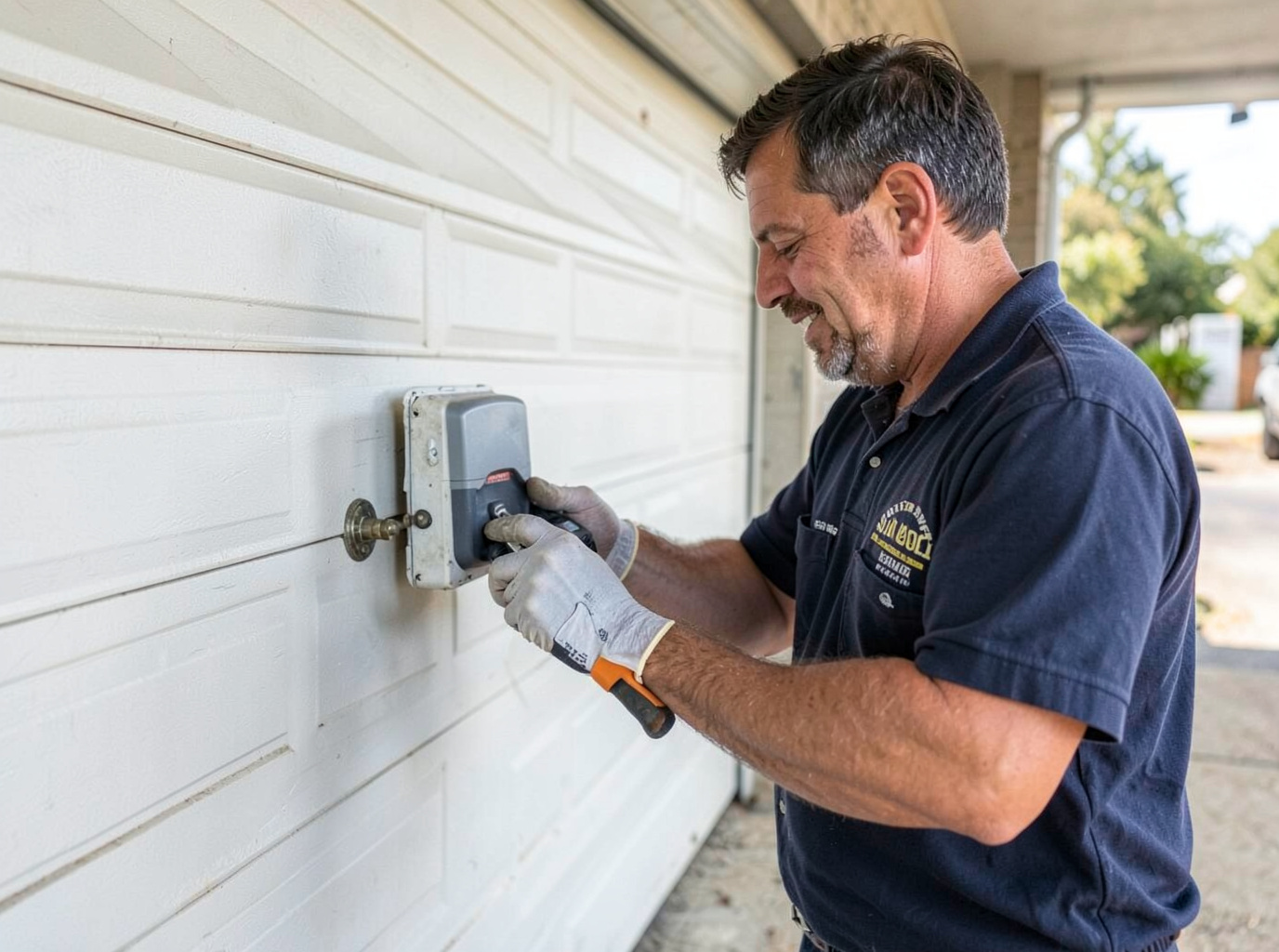
Garage doors in San Antonio work harder than most homeowners expect. Long summer afternoons push garage temperatures well past what springs, rollers, and opener logic boards were designed around, and caliche soil shifts slightly under slabs over time. Garage Door Repair San Antonio operates from 10817 Hillpoint Dr, 78217, on the city's northeast side, and we handle repair and maintenance for homes across the surrounding neighborhoods. Every visit starts with an inspection, every finding goes into writing before any work begins, and you get a walk-through of the old parts next to the new ones.
Why Choose Garage Door Repair San Antonio
Most garage door problems look simple from the outside. A door that stops halfway, a loud bang at the top of the track, or an opener that suddenly refuses to close can each come from a half-dozen causes, and guessing wrong wastes your time and money. We take the opposite approach. We inspect the door, the springs, the cables, the rollers, the hinges, the track alignment, the opener, and the safety sensors before we recommend anything, so the diagnosis rests on what we measured and saw.
You also keep control of the decision. We put findings in writing before any work starts, describing what is failing, why it is failing, and which repair options make sense. You can ask questions, compare options, and decide what to approve. If something can wait, we say so plainly. If a component is still serviceable, we leave it in place and explain why.
We believe in workmanship you can check yourself. When parts are replaced, we show you the removed component beside its replacement, explain the wear pattern on the old one, and point out what the new one changes. Our business address is public and listed above, so you know exactly where we operate. We communicate in plain language, not jargon, and we will tell you what we did, what we tested afterward, and what you should watch for in the coming weeks.
Why Garage Door Maintenance Matters Now in San Antonio
San Antonio's climate is hard on the mechanical parts that keep a garage door balanced. Once summer heat settles in, metal springs expand and lose tension faster, lubricant dries out on rollers and hinges, and the vinyl and rubber weatherstripping along the bottom seal begins to crack. Those changes happen gradually, which is exactly why they are easy to miss until the door starts sticking or the opener begins to strain.
Spring storms bring their own stress. Sudden wind gusts push on large panels, and a door that is already out of balance can rack, bind in the track, or shift off its rollers. Hail season can dent panels and crack older window inserts. A door that has been running on borderline tension for a long time often fails in the first hard weather event of the year, when a repair is more disruptive.
Caliche soil and minor slab movement can also change how the door sits in its opening over the years. Gaps widen at the corners, one side starts to drag, and sensors that were aimed perfectly drift out of alignment. Catching these changes early keeps the job small. Waiting until a spring snaps or a cable frays usually means a larger repair, a longer wait, and a more stressful morning when you need to leave the house.
Our Proof: How We Do the Work Properly
Good repair work is mostly about sequence. We begin by confirming the symptoms you describe, then test the door under your own conditions. We open and close it by hand to feel for binding, run the opener through a full cycle, check the balance by disconnecting the opener and lifting the door partway, and look at each spring, cable, drum, and roller for wear. We also test the safety reversal and the photo-eye sensors, because a door that closes correctly can still be unsafe if those systems are out of spec.
Once the inspection is complete, we write up every finding and explain it in plain terms before anything is changed. The write-up lists what is failing, what caused it where we can determine that, what repair we recommend, and what can wait. Nothing is replaced on assumption. When you approve the work, we proceed in the order we described, and we photograph or set aside removed parts so you can see the old components next to the new ones.
After the repair, we retest everything we touched. That means full open and close cycles, a balance check, a sensor test, and a reversal check at the bottom of the travel. We clean up the work area, remove packaging and debris, and walk you through what was done and what to watch for over the next few weeks.
Unique Scenario: A Door That Kept Reversing Mid-Close in San Antonio
One of the most common calls we hear from homeowners near the northeast side is some version of the same complaint: the door closes, then suddenly reverses before it reaches the floor. It is easy to assume the opener has failed, and sometimes it has, but in San Antonio the cause is often the safety system rather than the motor. Afternoon sun coming through a garage window can wash out the photo-eye sensors, and a sensor bracket that has been knocked or loosened by years of vibration can drift just enough to stop seeing the floor-level beam.
On a visit of this type, we would start at the sensors, not the motor. We would check whether both sensor lenses are clean, whether the indicator lights match on each side, and whether the wire running from the wall to the sensor has been pinched, nicked, or heat-damaged where it runs near the top of the track, where attic and garage heat collects. If the sensors are aligned and the wiring is sound, we would then check the door's balance, because a door that is heavier on one side can trigger the reversal even when the sensors are fine. Only after those checks would we discuss replacing any opener component.
If the findings pointed to a misaligned sensor bracket and a worn wire clip, the repair would be modest. We would re-aim the sensors, secure the wire away from the heat and the moving track, and retest the reversal at several points in the travel. We would also show you the old bracket next to the new one and explain how the wear developed. The outcome is a door that closes fully without reversing, a clear explanation of what changed, and a short list of things to check on a regular basis, such as sensor cleanliness and the bottom seal.
Garage Door Maintenance Services in San Antonio
Regular maintenance is the most reliable way to avoid an emergency repair, and it gives you a chance to catch small problems while they are still small. Our maintenance visits follow the same inspection-first approach as our repair work. We check the components most affected by local heat and seasonal storms, explain each finding in writing, and only recommend work you can see the reason for.
Torsion Spring Inspection and Replacement in San Antonio
Torsion springs carry most of the weight of a typical residential door, and they are one of the first components to show fatigue in hot climates. A spring that is losing tension makes the opener work harder, shortens its life, and can leave the door drifting or slamming. During an inspection, we look for visible gaps between coils, rust or pitting, and uneven tension from side to side. When replacement is needed, we show you the worn spring next to the new one, explain how many turns each carries, and confirm the balance before we leave.
- We check coil gaps, surface rust, and winding symmetry on both sides.
- We test balance by disconnecting the opener and lifting the door partway.
- We explain which spring is failing and why, in writing, before any work starts.
- We retest full travel, reversal, and balance after the replacement is complete.
Opener Safety Sensor Alignment in San Antonio
Safety sensors are small, but they decide whether a door reverses when something is in its path. In San Antonio, sun glare, dust, and gradual bracket drift can push a perfectly working sensor out of range. We check each lens, confirm the indicator lights on both sides, and test the reversal at floor level. Often the fix is a clean lens, a re-aimed bracket, or a wire routed away from the track, which is a quick correction when caught early.
- We clean and inspect both sensor lenses and their mounting brackets.
- We confirm indicator lights match and the beam is unobstructed.
- We test reversal at several heights along the door's travel.
- We show you the aligned position so you can recheck it yourself later.
Track, Roller, and Hinge Maintenance in San Antonio
Rollers, hinges, and track sections are where a door's movement either stays smooth or starts to bind. Summer heat dries lubricant, dust settles into the track, and slight movement in the slab can throw the track out of plumb. We inspect each roller for flat spots and wobble, check hinges and brackets for loose fasteners, and measure the track for gaps or bends. We clean and lubricate only the parts that need it and explain the reason for each step.
- We inspect rollers for flat spots, cracks, and wobble on the bearing.
- We check track alignment, plumb, and fastener tightness at each bracket.
- We lubricate moving parts with the correct product and avoid over-greasing.
- We note any worn hardware in writing so you can decide whether to address it now or later.
Frequently Asked Questions and Next Step
How do I know whether my garage door needs repair or only maintenance?
Squealing, grinding, slow or uneven movement, and a door that stops or reverses unexpectedly usually point to repair. Gradual changes, such as minor drag, dust in the track, or dry rollers, often fall under maintenance. Our inspection sorts the two and explains the difference in writing.
Why does my door reverse even when nothing is in the way?
The most common cause in San Antonio is a safety sensor that has drifted out of alignment or is being washed out by sun glare. A door that is badly out of balance can also trigger reversal. We test both possibilities before recommending any replacement.
Will you replace parts without showing me what failed?
No. We show you the removed component beside its replacement and explain the wear pattern. You also receive a written list of findings before work begins, so you know what is being changed and why.
How often should a garage door be maintained in this climate?
Many San Antonio homeowners benefit from an inspection before the hottest months and again before spring storm season. Heat, dust, and seasonal wind all accelerate wear, so an early look is usually more useful than waiting for a noise or a stuck door.
Can I check some things myself between visits?
Yes. Keep the sensor lenses clean, watch for gaps at the bottom seal, listen for new noises, and make sure the door moves smoothly by hand when the opener is disconnected. If you notice a problem, describe it to us in detail so we can plan the visit around it.
Next Step
If your garage door is sticking, reversing, making new noises, or simply feels different than it used to, start with an inspection at 10817 Hillpoint Dr, 78217. We will walk through what we find, explain it in writing before any work starts, and show you the old and new parts side by side. Describe what you are seeing and when it happens, and we will plan the visit around it.
Technician insight
In San Antonio, the thing that catches most people out with Garage Door Opener Repair is assuming the motor has failed when the real problem is a safety sensor that the afternoon sun has washed out or a wire that has baked brittle near the top of the track. we have opened up plenty of openers that were fine, and the homeowner had already talked themselves into a replacement. Check the sensor lenses and the wire routing first, then test the door's balance by hand before you accept that the opener is the culprit.
Opener Reversing Before the Floor
A homeowner on the northeast side reported that the door closed partway, then reversed before reaching the floor. We found that a sun-faded sensor bracket had drifted out of alignment and the wire near the track showed heat damage. We re-aimed the sensors, secured the wire away from the heat, and retested reversal at several heights. The door now closes fully, and the homeowner has a written record of what changed.
Garage Door Opener Repair Services We Offer
✓Garage Door Tune-Up in San Antonio
A tune-up covers the moving parts most affected by heat and dust. We inspect springs, rollers, hinges, and the track, lubricate where needed, and explain every finding in writing before adjusting anything.
✓Safety Sensor Alignment in San Antonio
Sun glare and bracket drift can make a working door reverse for no clear reason. We clean the lenses, re-aim the sensors, check the wiring, and retest reversal along the full travel.
✓Spring and Cable Inspection in San Antonio
We check torsion springs and lift cables for fatigue, uneven tension, and fraying. Replacement is recommended only when the wear is visible and documented, with old and new parts shown side by side.
✓Weatherstripping and Seal Maintenance in San Antonio
Bottom seals and side weatherstripping crack under strong sun and stiffen over time. We inspect the seal, note gaps in writing, and replace only the sections that need it.
How it works
- 1
Inspection
We test the door by hand, run the opener through full cycles, check balance, and inspect springs, cables, rollers, hinges, track, and safety sensors. Nothing is changed at this stage.
- 2
Written Findings
Every finding is written down in plain language, including what is failing, the likely cause, the recommended repair, and anything that can safely wait. You review it before we proceed.
- 3
Parts Walk-Through
When parts are replaced, we show you the removed component beside its replacement and explain the wear pattern on the old one, so you can see what changed.
- 4
Repair and Retest
We complete the work in the order described, then retest full travel, balance, and reversal. We clean the work area and explain what to watch for in the coming weeks.
Pricing
You receive written findings before any work starts, so every decision about what to approve is yours to make with the details in front of you.