2026-11-28 ·
Garage Door Noise, Sticking, or Uneven Closing: A Quick Troubleshooting Guide for San Antonio Homeowners
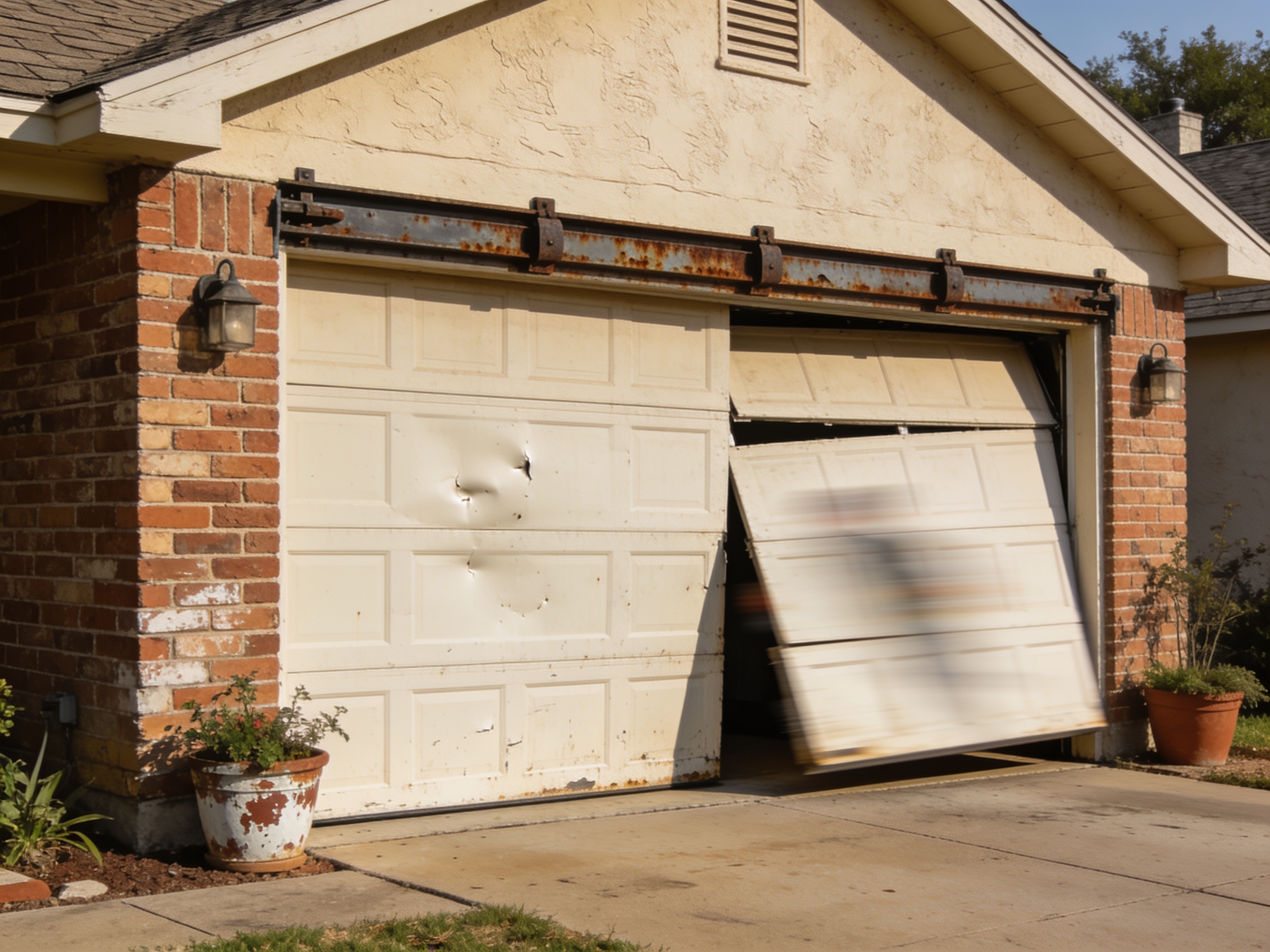
Most garage door noise, sticking, and uneven closing comes from one of four sources: worn or unbalanced springs, dry or misaligned tracks, a struggling opener, or loose hardware and debris. In most San Antonio homes you can narrow the problem down in about 15 minutes with a visual check and a few simple tests before deciding whether a cleaning, a lubrication, or a part replacement is needed. Start by listening to when the noise happens, watching how the door travels, and checking whether it closes evenly from edge to edge. Those three observations point you toward the right fix far more reliably than guessing.
Reading the Noise: What Different Sounds Mean
Each sound points to a different component, so listen closely before you touch anything. A grinding or scraping noise usually means rollers are worn or the track has debris or a bent section. A sharp bang or pop near the top of the door often signals a broken spring or a cable that has slipped off its drum. A high-pitched squeal typically points to dry hinges, rollers, or bearings that need lubrication.
- Grinding or scraping: worn nylon rollers, dirt in the track, or a rubbing bottom seal.
- Popping or banging: a spring under strain, a broken spring, or loose hardware.
- Squealing: dry metal-on-metal contact at hinges, rollers, or the center bearing.
- Rumbling during travel: an opener motor or drive chain that needs attention.
Note when the noise happens. Noise only at the start of travel often means spring tension is involved, while noise mid-travel usually points to the track or rollers. If the door makes a loud bang and then refuses to move, stop using it until it has been inspected.
Why the Door Sticks or Binds in the Track
Sticking usually comes from friction, misalignment, or debris rather than from the opener itself. Start by inspecting the tracks from inside the garage. Look for dents, flattened sections, or gaps where the rollers pass, because even a slight bend in the vertical or horizontal track will make the door hesitate. Wipe the track clean with a dry cloth to remove the dust, grit, and small pebbles that collect over the warmer months.
Next, lubricate the moving parts. Use a silicone-based or lithium-based spray on the hinges, roller stems, and bearings, and avoid heavy grease in the track because it attracts dirt. Once the track is clean, operate the door slowly and watch for a smooth, even movement. A door that jerks or stops at one spot often has a binding roller or a weakening spring. Summer heat can also soften old weatherstripping so the bottom seal drags, so check that too. Clean and lubricate first, then repeat the test. If the door still binds after this, the problem is more likely mechanical than surface friction.
Diagnosing Uneven Closing
A door that closes at an angle, stops higher on one side, or lands unevenly usually has one of three causes: a spring that has lost balance, a cable that is slipping, or a track that has shifted out of level. Stand inside the garage with the door closed and look at the bottom seal. If one side sits noticeably lower, that side is carrying more of the load than the other.
Test the balance by manually lifting the door about halfway with the opener disengaged. A balanced door should hold its position without drifting up or down. If one side drifts, the spring on that side is likely weakening. Check the lift cables for fraying or looseness, and confirm that both drums turn together. Set a level on the track to see whether it has moved. Adjust track brackets only by loosening the bolts slightly and tapping gently into alignment. Never adjust spring tension yourself, because torsion springs store enough energy to cause serious injury. If the door stays uneven after this visual check, have a technician inspect the springs, cables, and opener limit settings.
When to Stop Troubleshooting and Get Help
Some problems are reasonable to fix at home, such as cleaning tracks, lubricating hinges, and tightening loose bolts. Others need professional attention. If you see a broken spring, a cable that has come off its drum, or a bent track section, the door is no longer safe to operate. Keep it closed and avoid trying to force it by hand. A spring that has reached the end of its service life is the most common reason for these failures, and replacement is the reliable fix. Garage Door Spring Repair and Replacement covers the work involved in replacing springs safely, while Garage Door Opener Repair addresses motors, remotes, and travel limit settings.
San Antonio heat matters too. Sustained summer temperatures can accelerate wear on springs, rollers, and seals, so it helps to understand that pattern before problems appear. Our guide on why your garage door struggles during San Antonio summers and how to protect it from the heat walks through the seasonal side of this. If your home is in Alamo Heights, our local service page explains how scheduling works. Bring in a professional whenever troubleshooting leaves the noise,